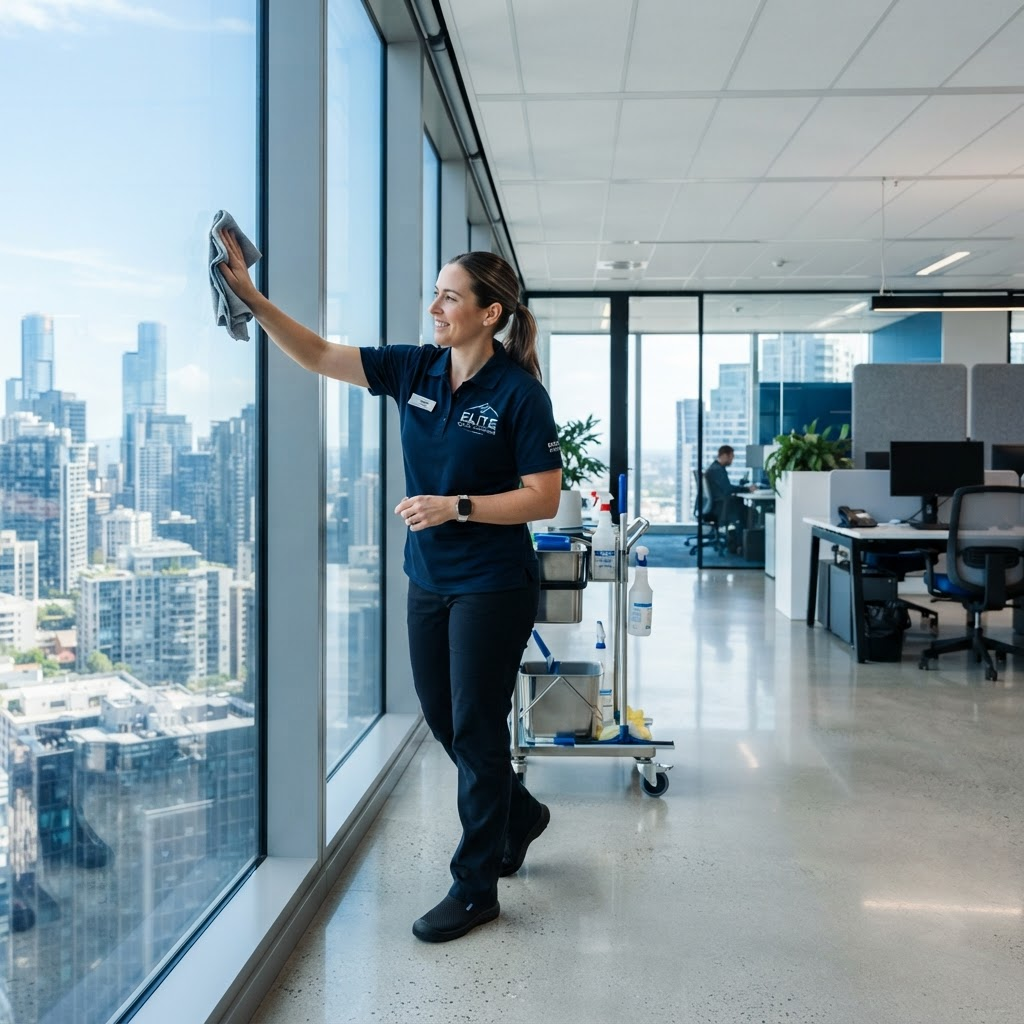
A workplace that looks clean is not necessarily a healthy one. Beneath the surface, dust, airborne particles, and high-touch surface bacteria accumulate silently — affecting air quality, staff well-being, and even how often people call in sick.
The hidden buildup professional cleaning addresses
Daily spot-cleaning keeps a facility presentable, but it rarely reaches the environments where problems actually grow: carpet fibres, upholstery, ventilation grilles, shared equipment, and the spaces behind and beneath furniture. Over weeks, these areas become reservoirs for allergens, dust mites, and microbial activity.
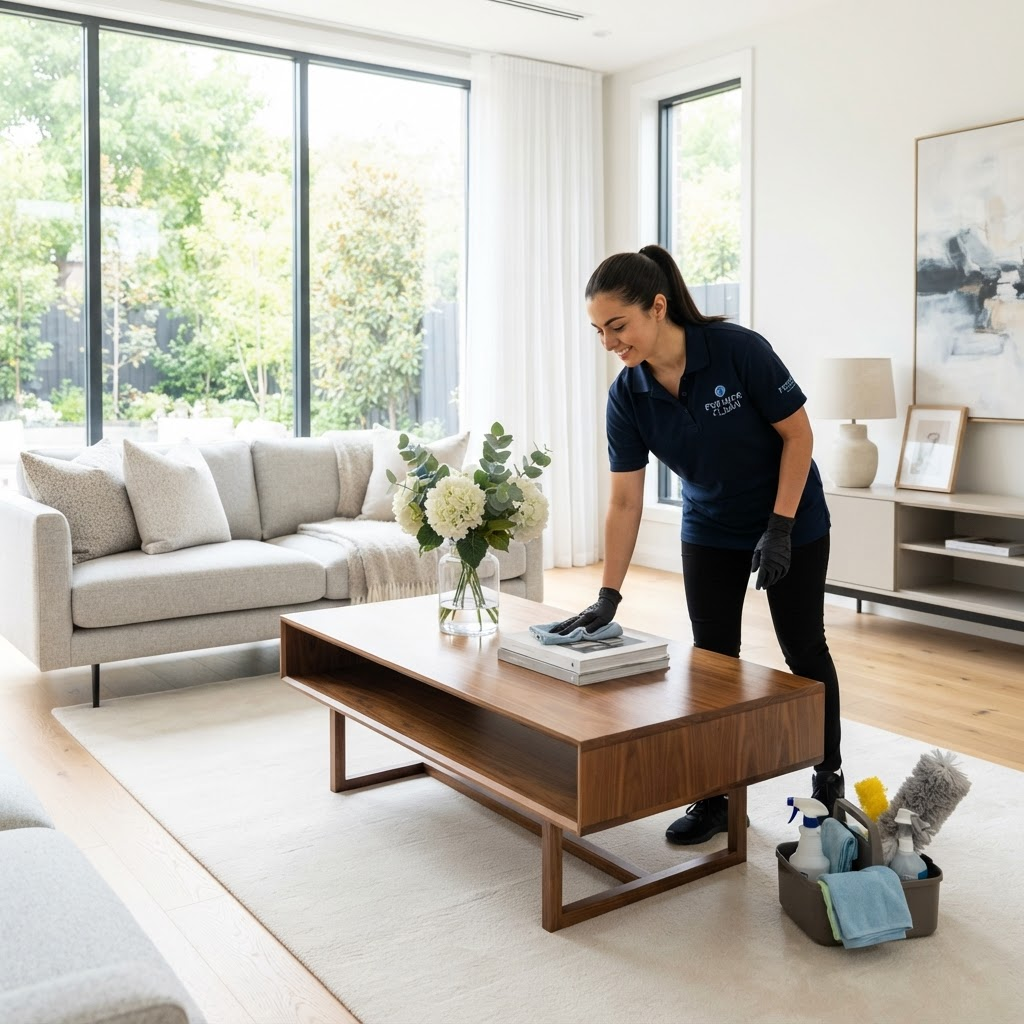
- Carpets and soft surfaces trap dust, pollen, and mould spores that recirculate into the air.
- High-touch points — door handles, light switches, lift buttons, and shared desks — transfer germs between staff and visitors.
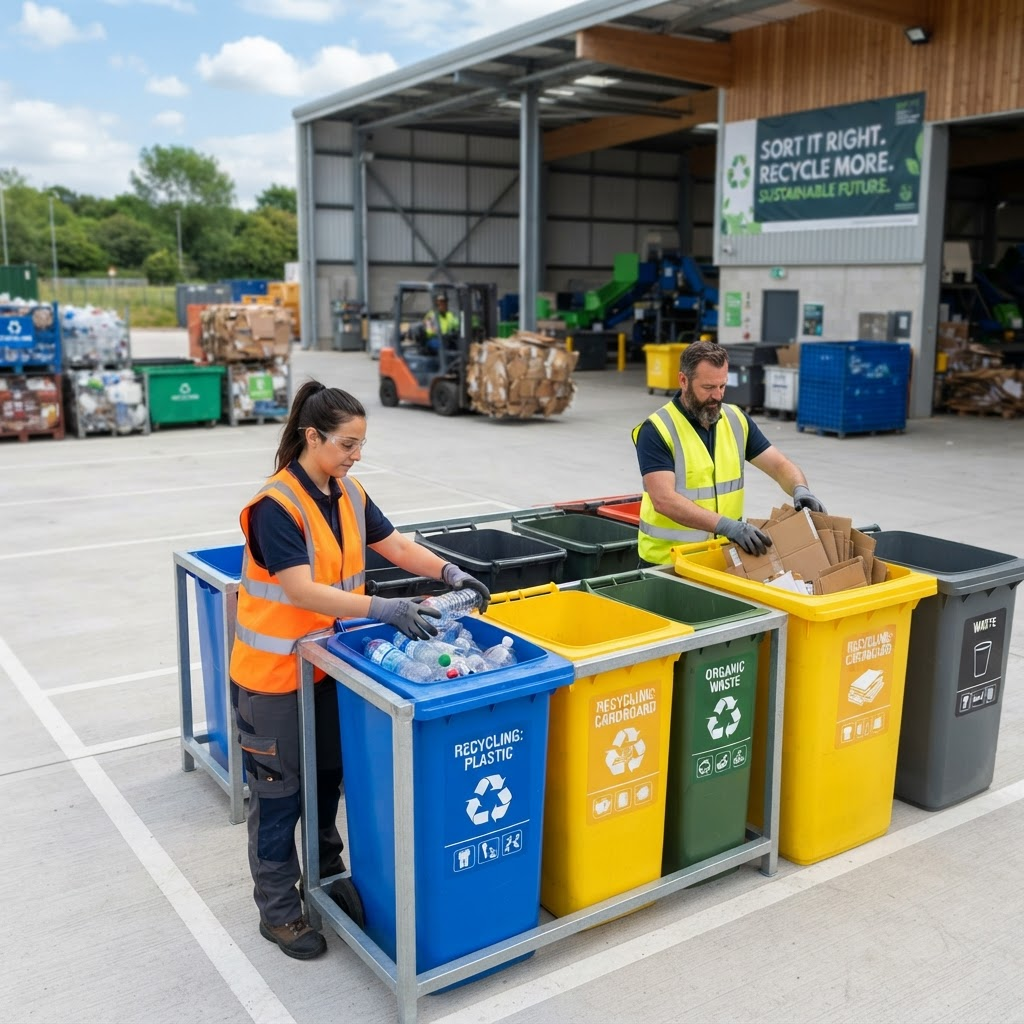
- Bins and kitchens attract odours, pests, and bacterial growth when not properly cleaned and sanitised.
- Dust layers on equipment and shelving can strain sensitive machinery and trigger allergies.
Indoor air quality and sick leave
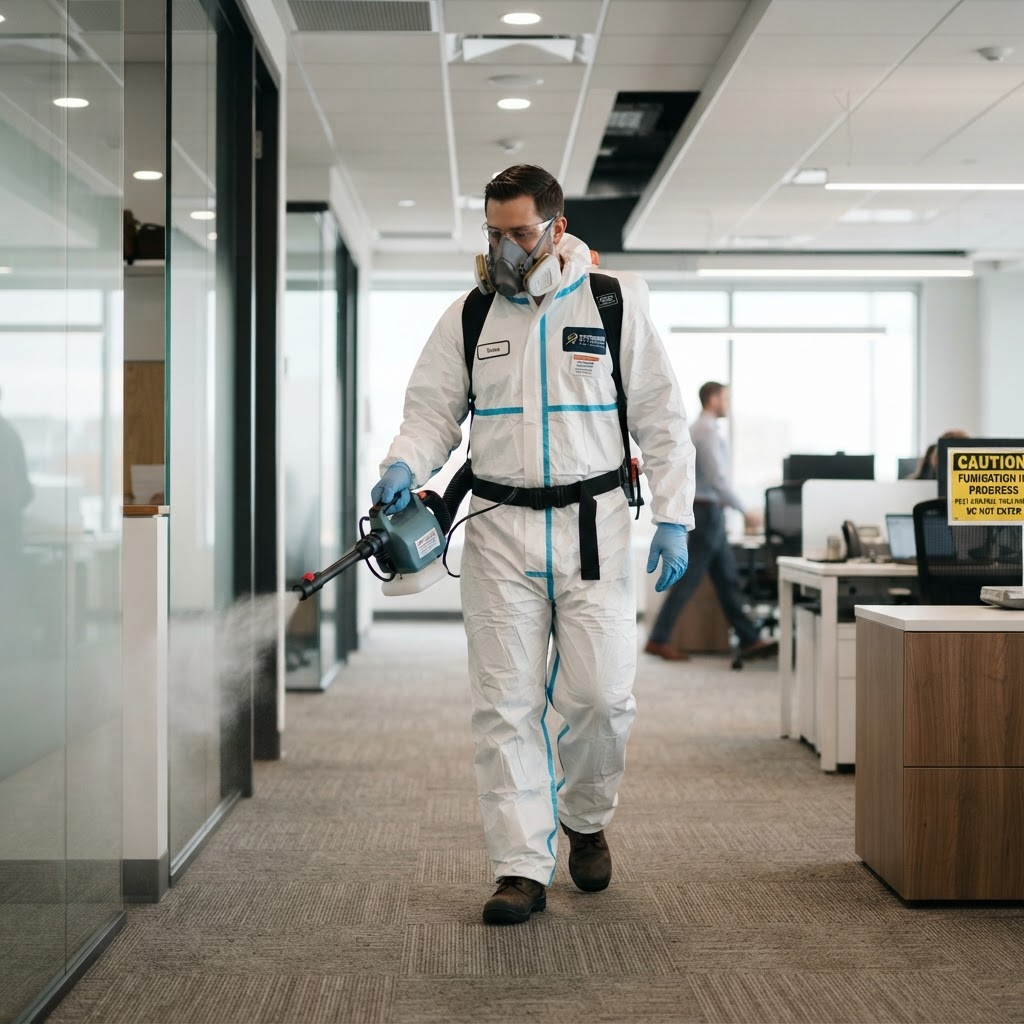
The most visible benefit of a deep, scheduled cleaning programme is often the one that is hardest to measure: a reduction in illness-related absenteeism. When airborne irritants are removed and high-touch surfaces are regularly disinfected, fewer respiratory complaints and common infections circulate through a building.
For many organizations, investing in professional cleaning is one of the most cost-effective health interventions available — it protects the team that keeps the business running.
Beyond appearances: compliance and professional image
Healthcare, hospitality, and food-related facilities face strict hygiene requirements. Even in general offices, a visibly well-maintained environment shapes how clients and partners perceive the business — and how staff feel about the place they spend their working day.
How often should a commercial space be professionally cleaned?
There is no single answer — the right cadence depends on foot traffic, industry, and the nature of the space. A daily or weekly professional schedule suits most offices, while warehouses and industrial sites may need more frequent attention, and healthcare environments require hospital-grade protocols. A site assessment is the best way to define a programme that fits your facility.
Build a cleaning schedule that protects your team
Professional commercial cleaning is an operational investment in health, productivity, and reputation. Our team can assess your facility and design a programme matched to its traffic, industry, and hygiene standards.
Related service
Interested in Commercial Cleaning? We can help.